Hello, I’m Jack from the app team, and this week, I’ll be looking into data on avalanches in Europe.
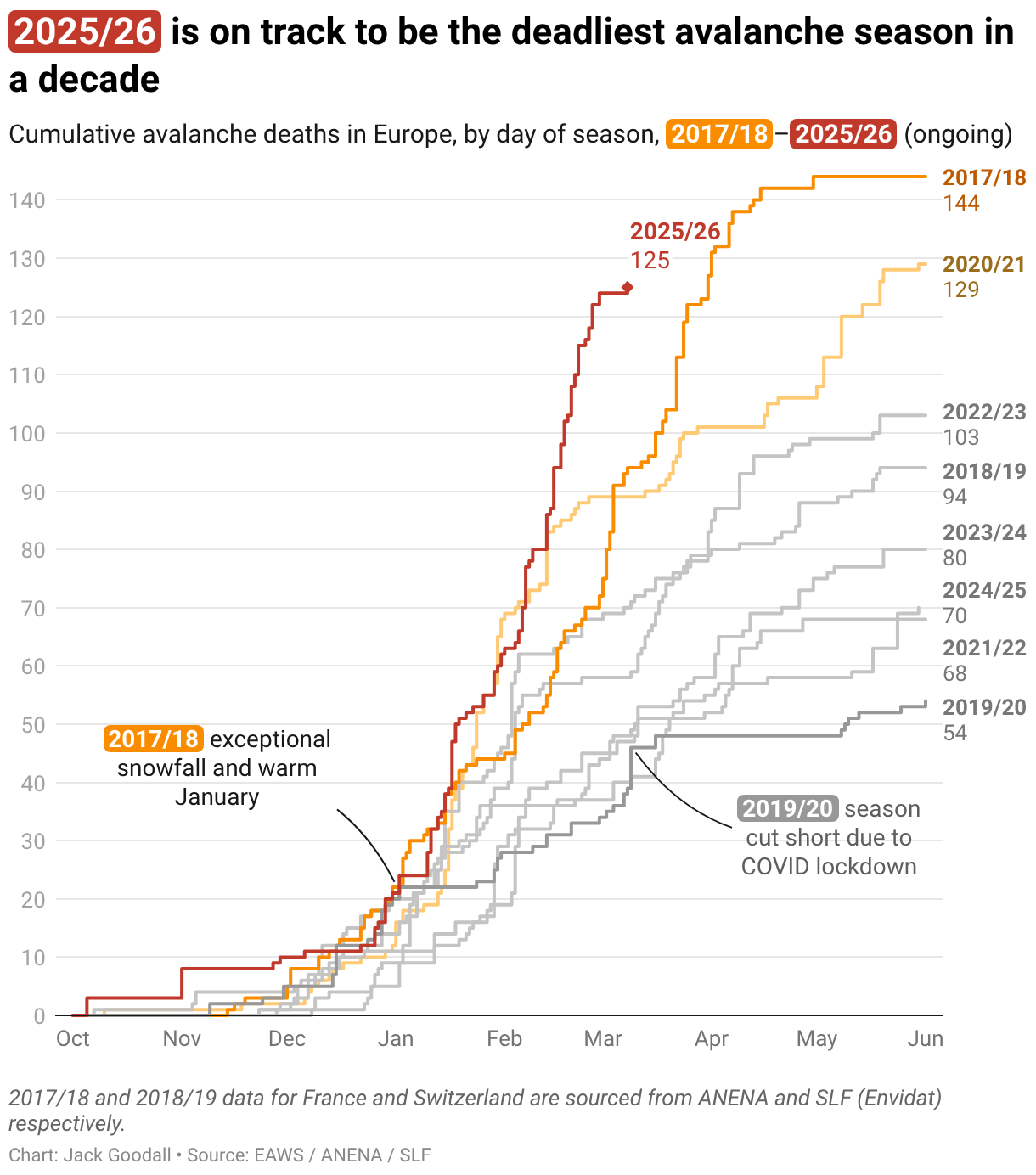
Across European mountain ranges, the 2025/26 season is on track to be the deadliest avalanche season in a decade. As of March 10 2026, there have already been 125 fatalities due to avalanches in Europe since the beginning of October.
To put that in perspective, an average of one hundred people die in avalanches every year. And this number has already been surpassed, with a couple of months left until the end of winter.
The avalanche season started earlier than usual when three people died on October 5 in Slovenia while hiking. Starting in late autumn, the weather conditions were cold and clear. Without new snowfall or wind to consolidate the surface, the snow crystals grow into a weak, sugary layer called a persistent weak layer at high altitude. This lasted well into December across much of the Alps, setting the stage for a particularly unstable snowpack — the accumulated layers of snow built up — for the next few months.

The second week of January to mid-February 2026 saw a succession of storms with strong winds and abundant snowfall across the western and central Alps. This, combined with February being the wettest since 1959 and the second warmest since 1900, created the ideal conditions for avalanche activity.

The result was one hundred deaths due to avalanches between January 9 and February 22.
Since late February, no major snowstorms have hit the Alps, and temperatures have climbed. Spring’s daily melt-freeze cycles — temperatures moving above and below zero, resulting in snow melting and then re-freezing — are gradually destroying the weak layers that caused so much damage this season. As it settles, so should the numbers. Hopefully, the worst is behind us.
Other unusual seasons
Over the last decade, a few seasons stand out in terms of avalanche deadliness:
2017/18: 144 deaths
The northern and western Alps saw near-record snow depths by January 2018, with some resorts reporting over 6 metres of settled snow, levels not seen since 1999.
An unusually warm and wet season meant repeated cycles of heavy snowfall, followed by mild spells, creating unstable layering throughout. The toll climbed steadily from October, and never really relented.
2019/20: 54 deaths
COVID-19 lockdowns closed ski resorts across Europe in March 2020, ending the season five to eight weeks early. When resorts closed, the death toll was broadly tracking an average year. The low final death count reflects fewer people in the mountains rather than a genuinely safer snowpack.
2020/21: 129 deaths
A direct parallel to 2025/26: a thin, cold, early snowpack formed sugary, persistent weak layers, later buried under the weight of January storms. The heavy new snow was too much for the fragile layer beneath to support. In the U.S., sales of backcountry equipment skyrocketed during the pandemic, putting more people than ever into avalanche terrain[5]، روندی که به طور گسترده در سراسر اروپا منعکس شده است.
2024/25: 70 کشته
زمستان سال گذشته یکی از دهها ملایمترین زمستان ثبتشده در سوئیس از سال 1864 بود، با بارندگی کمتر از میانگین در اکثر رشتههای آلپ از نوامبر تا آوریل. برف در جاهایی نازک و ناپایدار بود، اما برف کافی برای ایجاد رانش زمین بسیار بزرگتر وجود نداشت. بنابراین، اگرچه بسیاری از مردم – کمی بیشتر از حد متوسط - در بهمنهای کوچکتر گرفتار شدند، اما تعداد تلفات کم بود.
تغییرات اقلیمی کوه های آلپ را مرگبارتر نمی کند، اما مطمئناً شرایط را آشفته تر می کند. زمستانهای گرمتر و بارشهای غیرقابل پیشبینی برف ممکن است تنها دستور غذا برای فصول خطرناکتر در آینده باشد.
As someone who grew up in the Alps, this data hit close to home. If you’re heading into the mountains this spring, check the local avalanche bulletin and ensure you have the appropriate safety gear and training before you go off-piste. It could save your life.